We are pleased to announce that the 10th International Conference on Behavioral Addictions (ICBA) is due to take place on 7-8-9 July 2025 in Nantes, France.
This conference is the annual meeting of the International Society for the Study of Behavioral Addictions (ISSBA) that aims to assemble specialists working in the field of behavioral addictions to provide a venue for face-to-face networking, as well as a forum for presenting and discussing the most recent research results of the field.
We look forward to welcoming researchers, clinicians, social workers, health service professionals, people with lived experience and everyone else who is interested in behavioral addictions whatever their perspective is.
Join us in Nantes between July 7-8-9, 2025.
Yours sincerely,



Registration fee (deadlines are given in GMT+0 23:59):
| Early bird | Normal | Late / onsite | |
|---|---|---|---|
| ISSBA member | 490 EUR | 590 EUR | 690 EUR |
| Non-member | 600 EUR | 700 EUR | 800 EUR |
| Student ISSBA member | 350 EUR | 450 EUR | 550 EUR |
| Student non-member | 400 EUR | 500 EUR | 600 EUR |
Not included in the registration fee:
The use of the reduced registration fee is subject to the payment of the membership fee (for 2025) of the International Society for the Study of Behavioral Addictions (ISSBA). (Those who are already members are expected to pay the 2024 membership fee as well.)
The Journal of Behavioral Addictions offers a 15% discount for corresponding authors who are members of the International Society for the Study of Behavioral Addictions (ISSBA).
The registration fee includes:
Please note that we can only refund 40% of the registration fee if cancelled officially before the 30 April 2025. No refund is possible if cancellation is made at a later date.
Abstract submission is closed for symposia and oral presentation.
The deadline for mini-talks and posters is extended: 31 January 2025.
Abstract submission happens via an external tool: ConfTool. There, you may create a user account to enter, submit your abstract(s) and access the results of the reviewing process. To do so, please click on the "Click here" button.
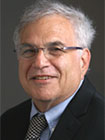
Jeffrey L. Derevensky, Ph.D., is Professor Emeritus, former James McGill Professor and Director of Clinical Training in School/Applied Child Psychology and Professor, Department of Psychiatry at McGill University, Montreal, Canada. He is a clinical and research consultant to numerous hospitals, school boards, government agencies and gaming corporations. He is the Director of the McGill University Youth Gambling Research and Treatment Clinic and the International Centre for Youth Gambling Problems and High-Risk Behaviors. Dr. Derevensky and his team have helped governments establish research priorities and have been instrumental in the development of responsible gambling practices, the development of treatment centers, prevention programs and social policy recommendations. He has testified before governmental bodies in the U.S., Canada, Europe, Asia and Australasia.

Susana Jiménez-Murcia, Specialist in Clinical Psychology and Associate Professor at the School of Medicine and Health Sciences (University of Barcelona, Spain). She has been the Director of the Pathological Gambling and Behavioral Addictions Unit at the University Hospital Bellvitge (Barcelona, Spain) and currently the Head of the Department of Clinical Psychology at the same Hospital and Director of the Territorial Mental Health Plan MetroSud. She is the Co-Chair of Group CIBERobn (Excellent Spanish Research Network for Obesity and Nutrition) and of the IDIBELL Group on Psychoneurobiology of Eating and Addictive Behaviors. She obtained her PhD in Psychology in 2004 at the Autonomous University of Barcelona. Master’s in clinical psychology and behavioral medicine in 1992 and her BP in 1988 (Clinical Psychology) all at the same university. She has published more than 400 articles in peer review journals with impact factor. She has given more than 300 invited lectures in International/National Conferences. Over 35 competitive research projects achieved in both National and European agencies.

Dr. Andrew (Hyounsoo) Kim, C. Psych is an Assistant Professor in the Department of Psychology at Toronto Metropolitan University and a registered clinical psychologist. He is also the Chair of Canadian Psychological Association’s Addiction Psychology Section. Dr. Kim’s contributions to research have been recognized through several awards including being named a Rising Star from the Association for Psychological Sciences.
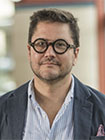
Dr Andres Roman Urrestarazu is a psychiatrist, public health clinician, health economist and group leader of the Mental Health | Policy | Economics Group at the University of Cambridge. He is Senior Harkness Fellow and Assistant Professor at Maastricht University. His work bridges behavioral addictions and mental health, substance use policy, health economics and neurodevelopmental conditions.

Marc Potenza, MD, PhD, is the Steven Southwick Professor of Psychiatry, Child Study and Neuroscience at the Yale School of Medicine where he directs the Division on Addictions at Yale and the Yale Center of Excellence in Gambling Research. He is also President-Elect of the International Society of Addiction Medicine.
Please visit our website later for more keynote speakers.
Nantes is a fast-growing city on the western French Atlantic coast, with a flourishing economy and vibrant cultural scene, making it one of Europe’s top emerging destinations.
It is the sixth largest city in France, with a population of more than 320,000 habitants for the city of Nantes and nearly 1 million inhabitants for the metropolitan area.
The Nantes metropolitan area, associated with the Saint-Nazaire metropolitan area constituting its outer port on the Loire estuary, today forms the main metropolitan hub of the West Region of France.
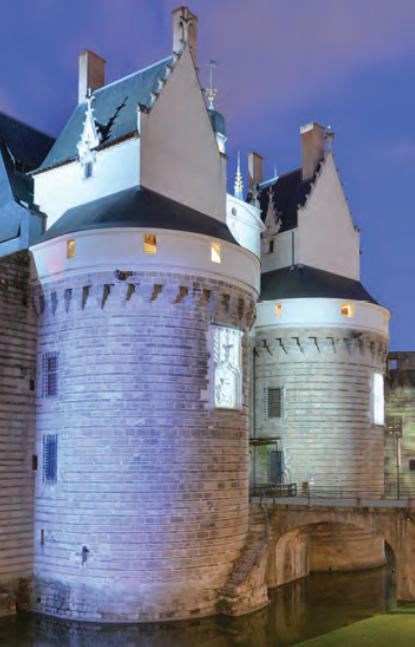
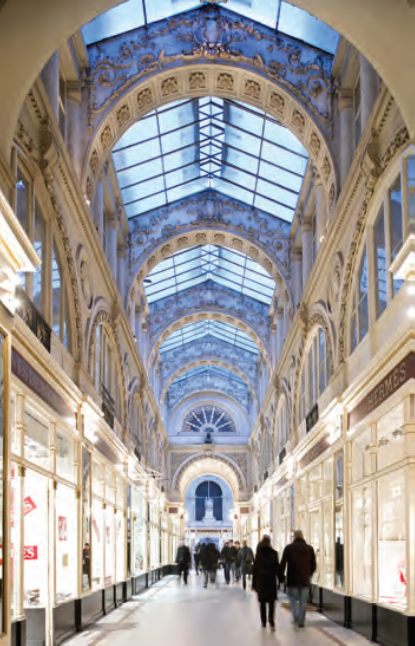
The city owes its development to its location on the banks of the Loire. Its rich architectural heritage, largely inherited from the 18th and 19th centuries, has allowed it to be awarded the label of city of art and history. The image of the city is the combination of different eras, symbolized by the castle of Nantes (Château des Ducs de Bretagne), Feydeau Island, the Pommeraye passage, the LU tower, the sporting exploits of FC Nantes, or more recently the shows of the Royal de Luxe artistic company.
As the first European Green Capital in France, Nantes is an eco-friendly city that successfully combines respect for environment and quality of life.
It is the ideal place to meet people, exchange and share ideas!
For more information please check this link:
https://www.levoyageanantes.fr/en/

ICBA 2025 will be hosted at the La Cité Nantes Congress Centre.
Address:
5, rue de Valmy – BP 24102
44041 Nantes Cedex 1 – France
(how to arrive, by train, plane or other transports / accessibility)
https://www.levoyageanantes.fr/en/to-plan/coming-to-nantes/
You can find information about Nantes’ transport (including public transport, taxis, car, airport shuttle, car rental with driver, park and ride, bike rental, etc.) on the link below:
https://www.levoyageanantes.fr/en/to-plan/getting-around/
Website of the Nantes’ public transport company (Naolib):https://naolib.fr/en
La Cité offers to participants free public transport during the conference. It will be an individual paper pass that will be provided upon arrival at the conference, and valid exclusively for the duration of the conference. Please note that this pass excludes the airport shuttle. The paper pass will be available at the registration desk on arrival, subject to availability.
A free mobile app is available for all your travels, to access timetables, traffic information, maps, routes, Tickets:
App store : https://apps.apple.com/us/app/naolib-tram-bus/id502653639
Google play: https://play.google.com/store/apps/details?id=com.semitan.tan&hl=en_US&pli=1
How to travel on Naolib network?
Costs:
How to buy tickets:
Please visit the “Voyage à Nantes” (a journey to Nantes) website:
Euro is the currency of France (banking code: EUR)
Debit cards and all major credit cards are widely accepted in France.
ATMs are available throughout Nantes.
Contactless payments are generally possible in most businesses.
In France, the standard voltage is 230 Volts and the frequency is 50 Hz. You can use your electric appliances in France, if the standard voltage in your country is in between 220 - 240 V (in the case of the UK, Europe, Australia and most of Asia and Africa).
The power outlets are type E. Both type C and E plugs can fit into power outlets (type E) in France.
During summer, the time zone in metropolitan France is the Central European Time (CEST) (UTC +2).
The international code for France is +33.
These are 24-hour service emergency numbers; we truly hope no one will need these:
Budapest (Hungary) - 11-12 March, 2013
Budapest (Hungary) - 16-18 March, 2015
Geneva (Switzerland) - 14-16 March, 2016
Haifa (Israel) - 20-22 February, 2017
Cologne (Germany) - 23-25 April, 2018
Yokohama (Japan) - 17-19 June, 2019
Nottingham (United Kingdom) - 20-22 June, 2022
Incheon (South Korea) – 23-25 August, 2023
The Journal of Behavioral Addictions (impact factor: 6,6) provides a unique opportunity to publish in the field of any behavioral addictions.
We expect to prepare a special issue in which all abstracts accepted for symposia, oral presentation, mini-talk or poster will be disseminated.
The aims of the International Society for the Study of Behavioral Addictions (ISSBA) are to study behavioral addictions and to help developing the interface of behavioral addiction science on the international stage.